Should architects be responsible for the safety of the occupants of the buildings they create? Or is this a function to be dealt with post-build? Whatever the sentiment, the risk of crime in South Africa can’t be ignored, so let’s look at how architects can add safety to the design mix.
Research conducted by the Trellidor team in 2020 found that across South Africa, over 90% of people require some level of security or access control at home to address an emotional need for safety. Participants in these interviews and focus groups expressed the same need of their shopping experiences and visits to public spaces. We live in a world of hypervigilance due to widespread criminal activity.
Today’s criminals are fearless, fast, and efficient. They watch, monitor, and assess weaknesses in a business or home’s security measures. And they time their raids to allow them to get in and out without detection, looking for the maximum reward with minimum risk.
Retrofitting is the most common way to install security systems of any type. Security service providers are often called in once a building is complete, or after a family has experienced a traumatic break-in. Service providers have to work with what’s already there in terms of building structure.
This can easily be done, but planning ahead gives better results. Security providers welcome the opportunity to work with architects, developers, and planners to devise a security solution that keeps people safe without negatively impacting on building design.
Purpose-driven design
Architects the world over are in the unique position of being able to strongly influence the spaces in which people live and work. They create structures that connect and unify people, whether it’s a new build or the restoration of an old one.
In South Africa, the high crime rate presents architects with an additional problem – how to protect people that use the building. Buildings with inadequate security will at some stage have to be retrofitted with safety measures, at which point the architect will no longer be in control of the outcome.
Designing with safety in mind allows architects to create buildings that incorporate function and beauty and at the same time, make those buildings safe for those that use them, without any negative impact.
Designed-in security has cost benefits too. A recent study by Brivo (surveying architectural, engineering and construction professionals in the U.S., UK, and DACH regions) found that when security is treated as an afterthought, fixing physical security problems post-build often adds as much as 20% extra cost. buildings.com
By embedding security into their designs, architects can reduce costs, lower crime, and create healthier communities. It may seem to be an impossible responsibility to manage, but there are examples of where this has worked.
Lessons learned from ‘Secured by Design’
Secured by Design (SBD) has its origins in the UK. It was launched in the late 1980s by the UK police force to counteract a sharp rise in burglary and vehicle crime. The SBD program drew on learnings from U.S and European research into Crime Prevention Through Environmental Design (CPTED).
This research found that natural surveillance, defensible space, and thoughtful site planning could reduce crime.
Over time, SBD in the UK proved that small design decisions can cut burglary by up to 50% in some neighbourhoods. These incremental changes included better lighting, clearer sightlines, defensible boundaries, and accredited physical barriers. They established that security is cheaper and more effective when built in from the start, rather than bolted on later.
The South African Context
SBD is not an official policy in South Africa but there have been moves in a similar direction. Since the late 1990s, the National Crime Prevention Strategy and White Paper on Safety & Security has recognised environmental design as a key crime-prevention tool.
There are also SANS 10400 National Building Regulation standards to incorporate in planning a building. These govern the design, construction, and safety of all buildings to ensure they are safe, healthy, and structurally sound.
As for the people that will use those buildings, the explosive growth in gated estates is proof that South African home buyers themselves prioritise safety. These developments use SBD principles by embedding security into designs. Estates may be exclusionary, but they also reflect the reality that physical barriers to crime remain essential in the South African context.
The Architect’s Role in Crime Prevention
So how do architects influence the eventual security status of a building, whether it’s a private home or a public space? Apart from their professional training, they can draw on the lessons learned by SDB and CPTED so that they:
1. Design Safe Spaces
Architects control the layout of spaces, both public and private. They can influence orientation, landscaping, lighting, and circulation to enhance security. Planning with occupant safety in mind can improve natural surveillance, control access, and expand threat visibility with minimal extra cost.
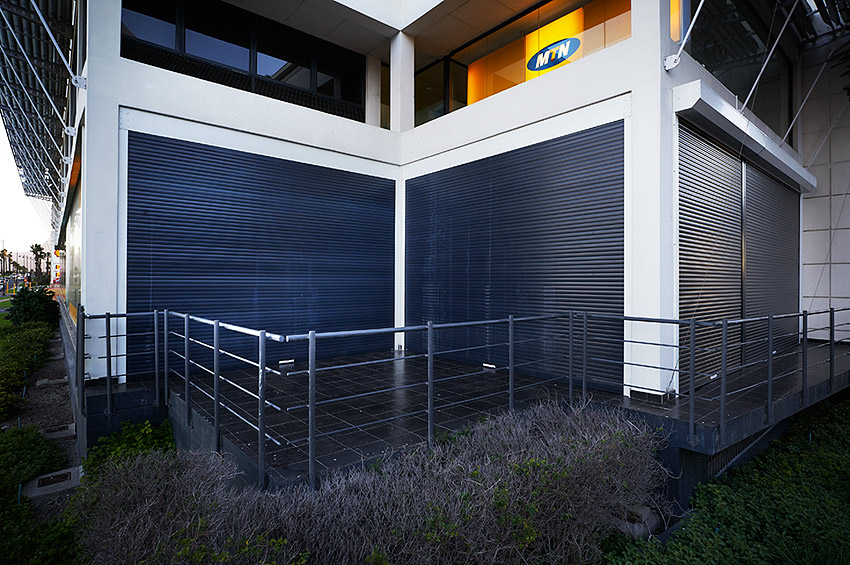
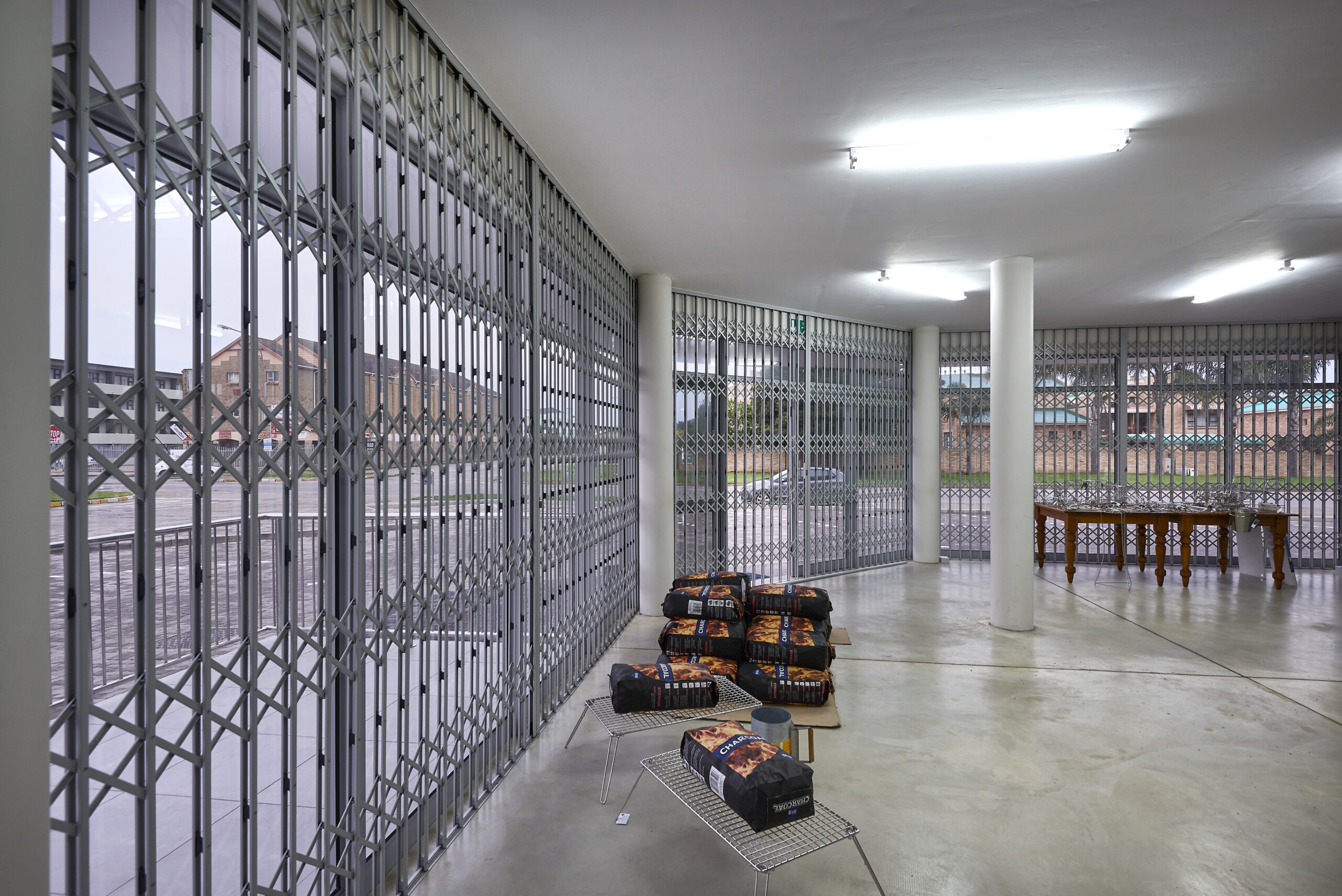
For example, a home can be positioned as street-facing so that dangers are visible before they become a problem. Entrances can be designed to include attractive see-through barriers like security screens, which are both welcoming and control access. Internal safe zones can be created using roller shutters, with motors hidden out of sight in pre-planned ceiling cavities.
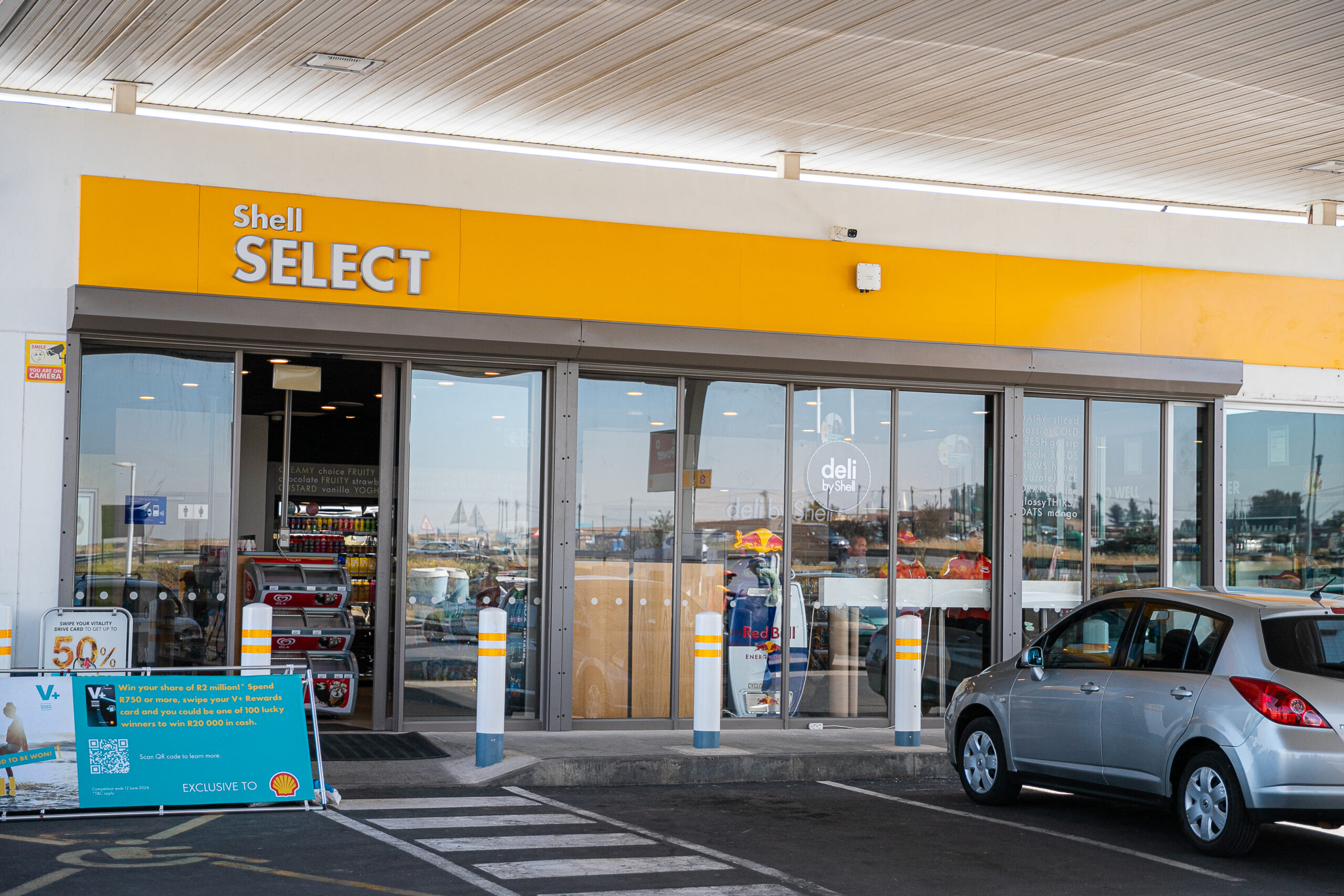
Commercial and retail buildings may require more technologically advanced security measures. Some of these include:
- Lift-resistant roller shutters that prevent after-hours smash and grabs.
- Cut-resistant technology developed to counteract petrol powered angle grinder attacks.
- Quick release locking mechanisms using a keyless locking system to open up quickly and easily during an emergency, without having to search for keys.
- Built-in strengthening features in some barriers that repel attacks by criminal gangs.
Designed-in safety features like these prevent costly and potentially unsightly retrofits later. If architects involve consultants or in-house security design professionals during concept and schematic design, security gaps and unsatisfactory additions can be avoided.
2. Use Digital Tools & Modelling
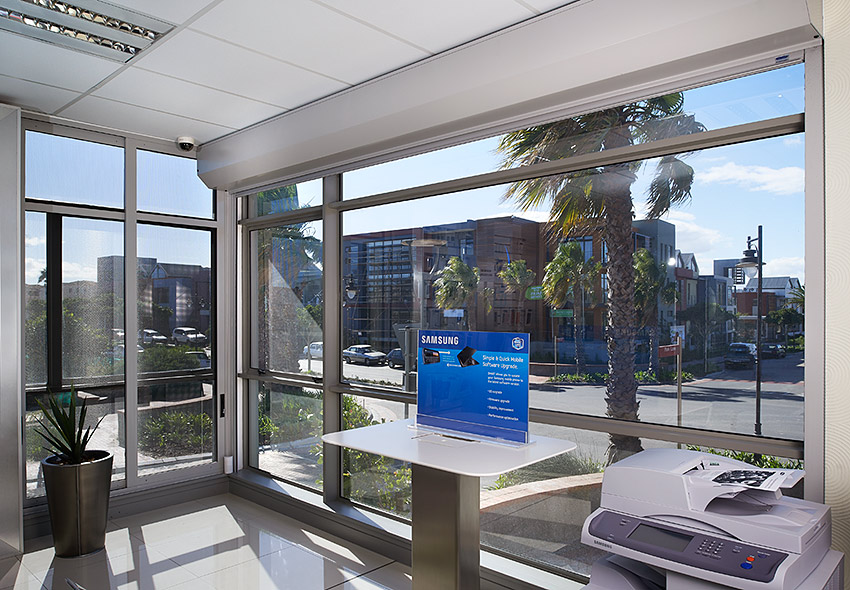
Tools like Building Information Modelling (BIM) enable architects to try product styles and work out potential costs. They can test client preferences in terms of the design, look, and feel of fixtures such as door and window barriers.
Modelling also helps architects balance hard and soft security, particularly in South Africa, where physical security barriers are non-negotiable. Walls, gates, bollards, and secure doors and windows are crucial in high-risk environments. These barriers can be softened with landscaping and by choosing materials carefully.
3. Future-proof Safety and Costs
Using concepts such as SBD and CPTED helps to identify and design out threats. It also gives the architect some control over what the building will look like in the future if those threats change and further security measures are added.
Planning for physical security barriers during the building design phase saves on costs in the long run because it avoids expensive retrofits. It is looked upon favourably by insurance companies which may reduce premiums due to lower risk profiles.
Changing crime patterns, technology and climate conditions mean that building design needs to allow for upgrades. Buildings may also be altered over time and security measures need to merge seamlessly into the new structures. It is more cost-effective overall to design buildings with these factors in mind.
Additional cost-savings come from selecting barriers manufactured from durable, low maintenance materials in designs that resist tampering. Specifying crime barriers that have a track record in terms of strength under attack, frequent use, and corrosion resistance will have a long, cost-effective life cycle.
Why Physical Barriers Still Matter
While CPTED emphasises natural surveillance and activity, South Africa’s crime environment makes physical barriers indispensable. Barriers can be thoughtfully integrated to avoid creating a space that resembles a fortress. Architects can design or specify barriers that are protective but blend in with the building.
Physical barriers take various forms:
- Perimeter security
High walls, electric fencing, and access-controlled gates deter opportunistic crime.
- Building-level barriers
Security-rated doors, burglar bars, and safety glass doors increase resistance time, giving occupants and response teams crucial minutes.
- Urban-scale barriers
Bollards, fencing, and controlled vehicle access protect against vehicle crime and terrorism in public areas.
To assist architects with the optimum incorporation of physical barriers into a design, the Trellidor team runs regular CPD-accredited workshops. These workshops focus on security integration using CPTED principles, and specification best practices.
The workshops give architects the opportunity to explore products fit-for-purpose. For example, Clear Guard security screens maintain sightlines, Retractable Gates offer flexible access, Rollerstyle shutters create safe zones, sectional overhead doors are ideal for large openings, and fixed bars in various pattern choices provide permanent protection. These are all covered in the workshops, as well as customisations that architects can specify.
In Conclusion
South Africa is home to a dynamic architectural landscape. But it is also a country facing rampant burglary, robbery, and violent crime. This shapes how communities live and how developments are planned. For architects, this reality presents a challenge to design for safety as well as form and function. By designing with security in mind, architects can lower costs, reduce crime, and increase quality of life for the occupants of their buildings long into the future.
Over to you: As an architect, developer, or planner, how do you integrate security into your projects? Do you lean more toward hard barriers, or softer CPTED strategies? Let’s share ideas below.