South Africa’s mining industry operates in one of the country’s most demanding and high-risk environments, where safety, operational continuity and physical security are deeply interconnected. From underground storage areas and control rooms to above-ground access points and processing facilities, mines face mounting pressure to protect critical infrastructure, valuable assets and, most importantly, the people working on-site every day.
While the industry continues to prioritise its “Zero Harm” commitment, the conversation around mine safety has evolved significantly in recent years. Safety today extends beyond personal protective equipment and operational protocols. It increasingly includes the role that secure infrastructure, controlled access and emergency readiness play in protecting workers in both routine and high-pressure situations underground.
At the same time, illegal mining activity, theft and sabotage continue to present serious operational risks across the sector. Mining operations are often located in remote areas and may house high-value equipment, copper cabling, explosives, communication systems and precious metals, making them attractive targets for criminal activity. Security failures can result in operational downtime, infrastructure damage and heightened safety risks for workers underground.
“Mining environments require security solutions that can perform reliably under extremely demanding conditions,” says Damian Judge, Sales & Marketing Executive at Trellidor. “It’s not only about restricting access or safeguarding assets. Security infrastructure in these environments must also support safe movement, emergency evacuation procedures and the day-to-day realities of a working mine.”
One of the major challenges facing the sector is the lack of formal local regulations governing minimum specifications for many physical security barriers in South Africa. Unlike other built-environment categories that have clearly defined compliance requirements, physical security products can vary significantly in material quality, locking mechanisms and structural integrity. This has placed growing focus on internationally recognised standards and independently tested products.
Global certification bodies such as the Loss Prevention Certification Board (LPCB) provide internationally recognised testing standards for products designed to withstand physical attack and forced entry. Certification not only evaluates the performance of the product itself, but also assesses manufacturing consistency, material quality and quality management processes. For mines, this level of assurance can be critical in areas where infrastructure vulnerability could have operational or safety implications.
Subterranean control rooms, lamp rooms, ventilation intake shafts and secure holding areas all require robust access control systems capable of preventing unauthorised access without compromising worker safety. At the same time, security infrastructure must allow personnel to move efficiently between restricted zones and ensure rapid exit during emergencies.
“In underground environments, every security decision must balance safety with practicality,” says Judge. “You cannot create safe spaces that become obstacles during a crisis situation. Products used in these applications need to be designed and tested with both security performance and human movement in mind.”
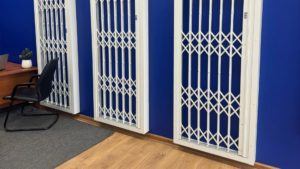
Manual security systems can offer additional advantages in mining applications, particularly in remote or underground environments where uninterrupted power supply cannot always be guaranteed. Physical retractable barriers and roller shutters that operate independently of electricity can help maintain security continuity during outages or operational disruptions.
Internationally attack-tested retractable barriers are also increasingly being considered as alternatives to highly customised and costly engineering solutions in high-risk industrial settings. In many cases, certified systems can deliver the required level of security while simplifying installation, maintenance and long-term operational reliability.
The LPCB’s internationally recognised Red Book platform has further strengthened transparency in the market by allowing insurers, engineers, architects and procurement teams to verify whether products and manufacturers meet globally recognised standards.
As mining companies continue investing in safer and more resilient operations, the role of certified physical security infrastructure is expected to become more important across the industry.
“The mining sector cannot afford uncertainty when it comes to security infrastructure,” concludes Judge. “Certified solutions give operators confidence that the products secure their people, infrastructure, and critical assets have been independently tested to perform under pressure.”